RHD is the most commonly acquired heart disease in people under the age of 25
Rheumatic heart disease is a condition which affects more than 55 million people worldwide.
Every year, it accounts for nearly 2% of all deaths from cardiovascular disease—the number one cause of death globally.
RHD most commonly occurs in childhood and can lead to death or life-long disability.
The Beat of Change
Rheumatic Heart Disease in Mozambique
Celia's Story
Rheumatic heart disease (RHD) is a life-threatening heart condition which results from damage to heart valves caused by one or several episodes of rheumatic fever, an autoimmune inflammatory reaction to infection with streptococcal bacteria (streptococcal pharyngitis or strep throat).
The bacterium Streptococcus pyogenes (group A streptococcus) can pass easily from person to person in the same way as other upper respiratory tract infections. These infections are most common in childhood.
In some cases, repeated strep infections can lead to rheumatic fever, which occurs when the immune system reacts against the tissues of the body, including inflaming and scarring the heart valves.
Rheumatic heart disease is caused by damage to the heart valves and heart muscle from the inflammation and scarring caused by rheumatic fever.
RHD claims over 300,000 lives each year, mostly in low- and middle-income countries
Most RHD patients do not reach 40 years of age
A disease of poverty
Rheumatic heart disease is a preventable yet serious public health problem in low- and middle-income countries and in marginalized communities in high-income countries, including indigenous populations.
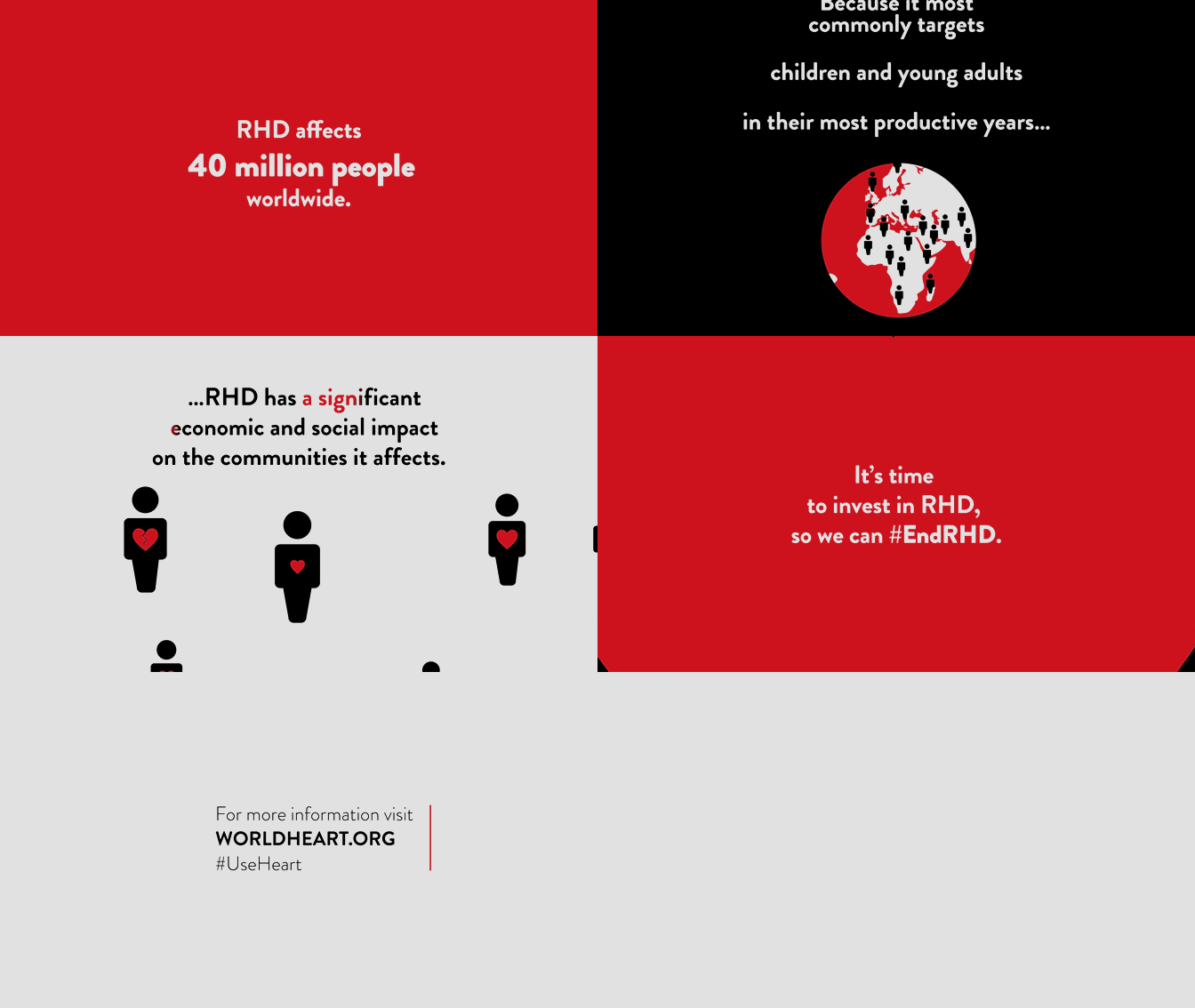
Highly prevalent in Europe after World War II, rheumatic heart disease now affects mostly low- and middle-income countries, especially in sub-Saharan Africa, the Middle East, South-East Asia and the Western Pacific. More than 300,000 people die every year from RHD and a further 40 million people live with the disease, mostly children and adolescents in low- and middle-income countries, especially where poverty is widespread and access to health services is limited. Socioeconomic and environmental factors such as poor housing, undernutrition, overcrowding and poverty are well-known contributors to the burden of rheumatic fever and rheumatic heart disease.
The economic cost to countries with a persistently high incidence of rheumatic heart disease is significant, because its most devastating effects are on children and young adults in their most productive years.
RHD in pregnancy
Rheumatic heart disease disproportionately affects girls and women, whose risk of developing rheumatic heart disease is two times higher than in men and boys. Rheumatic heart disease is the leading cause of maternal cardiac complications in pregnancy. Pregnant women with rheumatic heart disease are at risk of adverse outcomes, including heart arrythmias and heart failure due to increased blood volume putting more pressure on the heart valves. It is not uncommon for women to be unaware that they have rheumatic heart disease until pregnancy.
Signs & Symptoms
Symptoms of rheumatic heart disease may include:
- Chest pain or discomfort
- Shortness of breath
- Swelling of the stomach, hands or feet
- Fatigue
- Rapid or irregular heartbeat
Symptoms of RHD may not be noticed for many years. When they do develop, symptoms depend on which heart valves are affected and the type and severity of the damage.
Symptoms of rheumatic fever include:
- Fever
- Painful joints especially knees ankles, elbows and wrists
- Pain that moves between different joints
- Fatigue
- Jerky uncontrollable body movements
- Painless nodules under the skin near joints and/or a rash consisting of pink rings with a clear centre (both rare)
Treatment
There is no cure for rheumatic heart disease and the damage to the heart valves are permanent. Patients with severe rheumatic heart disease will often require surgery to replace or repair the damages valve or valves. Depending on the severity of disease, medication may also be needed to treat symptoms of heart failure or heart rhythm abnormalities. Medications which thin the blood to reduce the risk of blood clots may also be needed. In the case of serious disease, surgery may be required to repair or replace the heart valves.
Prevention
Effective early intervention can prevent premature mortality from rheumatic heart disease.
There are three levels of prevention for rheumatic heart disease: reducing the risk factors for rheumatic fever (primordial prevention); primary prevention of rheumatic fever and rheumatic heart disease; and secondary prevention (prophylaxis) of rheumatic fever and rheumatic heart disease.
Primordial prevention aims to avoid episodes of strep throat by tackling poverty, improving living and housing standards, and increasing access to health care.
Primary prevention of rheumatic fever can be achieved through the effective treatment of strep throat with appropriate antibiotics (penicillin).
Secondary prophylaxis: Once a patient has been identified as having had rheumatic fever, it is important to prevent additional streptococcal infections as this could cause a further episode of rheumatic fever and additional damage to the heart valves. The strategy to prevent additional streptococcal infection is to treat a patient with antibiotics over a long period of time. The antibiotic treatment that is most effective in preventing further infection is benzathine penicillin G, which is given by intramuscular injection every 3-4 weeks over many years.
For countries where rheumatic heart disease is endemic, the main strategies for prevention, control and elimination include:
- Improving standards of living
- Expanding access to appropriate care
- Ensuring a consistent supply of quality-assured antibiotics for primary and secondary prevention
- Planning, development and implementing feasible programmes for prevention and control of rheumatic heart disease
- Adequate monitoring and surveillance
Challenges
Ending RHD is a challenge due to a combination of low awareness, lack of healthcare access and treatment, inadequate diagnosis and inadequate medical training.
While rheumatic heart disease can easily be prevented by effective management of strep throat, treatment at this early stage is often not achieved. Families may not have the means to access a healthcare facility or may not seek care due to low awareness of the potential risk of untreated strep throat. Healthcare workers may also not have the necessary knowledge to appropriately diagnose and manage a strep throat. Currently, a large proportion of those suffering rheumatic heart disease are not diagnosed or are diagnosed at a late stage when damage to the heart is very severe.
When long-term treatment is required, access to care becomes an even greater issue, as it can be costly and challenging for patients to regularly visit a healthcare facility.
A steady supply of benzathine penicillin G is an essential prerequisite for treatment of sore throat and to prevent recurrent infection. However, the antibiotic is prone to global shortages. While demand for the drug is rising, high manufacturing costs and low purchase prices have pushed some manufacturers out of the market. When the medication is not available, necessary long-term treatment regimens are disrupted.
Finally, in many rheumatic heart disease-endemic countries there is little or no access to life-saving heart valve surgery, or when it is available the costs may be too high if not covered as part of national health plans, putting families under increased financial strain.
A pathway to prevention and care
Measures to halt the progression to severe rheumatic heart disease require long-term treatments and a well-functioning health system to deliver this service.
Improvements include changes in policy, better livelihood opportunities, medical training, and affordable, accessible access to quality healthcare. Community awareness campaigns and healthcare access, supported by the availability of quality benzathine benzylpenicillin (BPG) and the development of a Group A Streptococcus vaccine, must underpin the strategy for eradication of RHD.
The World Heart Federation is committed in our goal to obtain a steady and quality-assured global supply of BPG. Alongside the American Heart Association (AHA), we contributed USD 30,000 to fund inspections of BPG manufacturing plants in China as part of efforts to achieve WHO pre-qualification status in the process towards a safe and high-quality product. We also continued to work towards measures that global procurers can take to ensure a viable BPG market.
Investing in the secure supply of quality assured benzathine penicillin G will prevent the recurrence of global shortages and contribute to global efforts to increase access to quality-assured, safe, effective, and affordable essential medicines.
WHO Global Resolution on Rheumatic Fever and Rheumatic Heart Disease
In 2018, Member States of the World Health Organization unanimously adopted a Global Resolution on Rheumatic Fever and Rheumatic Heart Disease at the World Health Assembly in Geneva, Switzerland. This historic decision marks the first time that rheumatic fever and rheumatic heart disease have been recognised as global health priorities on the world stage. The Resolution was co-sponsored by countries from all six WHO regions, demonstrating the urgent need for a global response.
Recommendations include:
- Improving access to primary healthcare
- Strengthening data collection and knowledge of RHD prevalence in endemic countries
- Ensuring affordable and reliable access to technologies and medicine
- Strengthening national and international cooperation
- Tackling the root causes of RF & RHD
- Putting people living with RHD at the heart of the prevention and control agenda
- Raising the profile of RHD and other noncommunicable diseases (NCDs) affecting children on the global health agenda
- Supporting and facilitating timely, affordable and reliable access to existing and new cost-effective medicines and technologies for the prevention and control of RHD.
Colours to Save Hearts
RHD is the most commonly acquired heart disease in people under 25
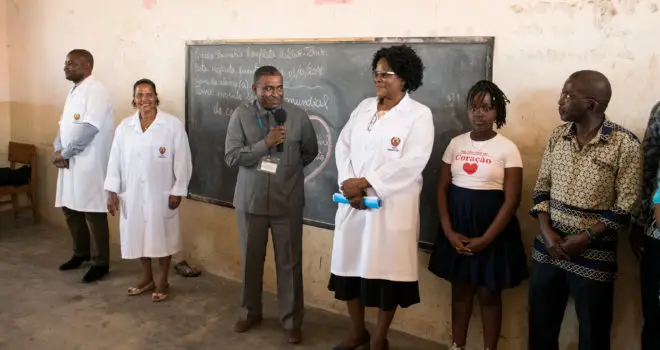
Colours to Save Hearts is an initiative aimed at raising awareness of rheumatic heart disease (RHD) among children, teachers and parents, and educate them about the link between sore throat and rheumatic heart disease, how to recognise symptoms and what to do when they first appear.
Learn more